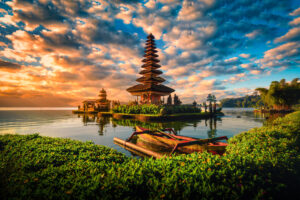
Bali is a small Indonesian island province in the Lesser Sunda Islands, just east of Java across the Bali Strait. It is also Indonesia’s Hindu-majority province, which is why the “Island of the Gods” nickname feels true the moment you arrive. Belief is not reserved for temple courtyards. It sits in plain sight: offerings on thresholds, ceremonies that shape the calendar, and a daily rhythm that makes space for devotion without turning it into a performance.
As a destination, Bali is defined by contrast. The south is salt-air and surf culture, with a lively dining scene, stylish hotels and an energy that suits travellers who like to have everything on the doorstep. Travel inland and the temperature drops. The landscape turns steep and green, with river valleys, rice terraces and villages where craft traditions and temple life are part of the scenery rather than an “experience”. Ubud is the natural base for this side of the island, with temples and galleries, an established art and crafts community, and access to countryside walks, spa time and some of Bali’s strongest wellness retreats.

The land shapes the trip as much as the culture. Bali is volcanic, and its peaks anchor the island both visually and spiritually. The rice terraces, meanwhile, are not simply photogenic. They are part of the subak, a cooperative irrigation system of canals and weirs centred on water temples, with roots stretching back over a thousand years. It is recognised by UNESCO as a cultural landscape, linked to the Balinese philosophy of Tri Hita Karana, which emphasises balance between the spiritual realm, the human world and nature. In other words, some of Bali’s most famous views are also working systems, and that is a large part of why the island feels so deeply lived-in.
Beach time here is not one-size-fits-all. The golden south coast and Seminyak suit travellers who want refined beachfront stays, strong restaurants and an easy first introduction to Bali. If you prefer quieter days, the east coast can feel calmer and less compressed, with slower bases and time to switch off. Offshore, there are also good options for snorkelling and diving, depending on where you choose to stay and the conditions at the time of year.

Bali is also evolving. New boutique hotels and architect-led villas have changed the look of certain areas, and a modern Bali has grown around design, wellness and food without replacing what came before. You can keep things simple, or follow the island’s contemporary edge through thoughtful restaurants, small shops and experiences that focus on craft, cooking and well-being.
Practically, Bali works best when you do not try to “do it all” from one base. Two stays usually makes the island click: a coastal address for ocean days and dining, then an inland base for culture, scenery and breathing space. Add a little adventure and it becomes even more rewarding. Mount Batur is one of the island’s classic early starts, with a pre-dawn ascent for sunrise views from the summit.
Bali can be a destination in its own right, but it also pairs naturally with the rest of Indonesia, from more remote islands for diving to wildlife-focused extensions, or Java for landscape-led add-ons including the Ijen Plateau.

Bali, Tailored to You
At The Ultimate Travel Company, every holiday is created individually around you. Use the itineraries here as inspiration, or as a starting point for planning your luxury Bali holiday.